Setup
Before we build our Obby, we need to get Roblox Studio ready. This page is a one-time setup — after this, every stage starts from the same blank workspace.
Helpful links (optional reading)
Brand new to Roblox Studio? These short Roblox docs are nice to skim:
- Interface Overview — a tour of the buttons and panels in Studio.
- Parts — how to create and shape blocks. We'll use a lot of these.
- Intro to Scripting — only needed if you plan to try the Hard Stretch Challenges.
The big idea
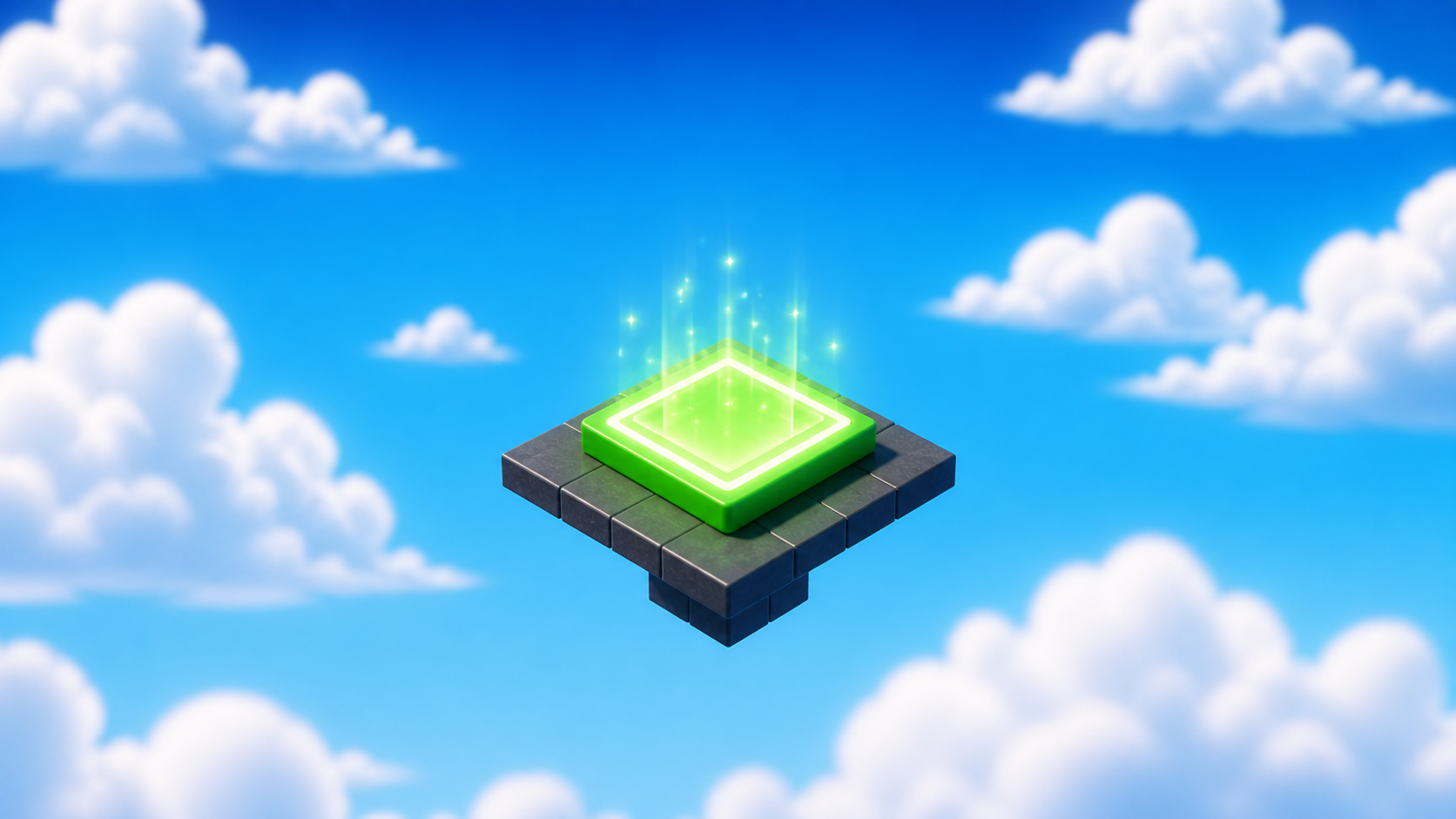
Every Obby stage we build over the next ten lessons will start from the same place: a small Start Platform in the sky with one SpawnLocation on it. That's it. No floor below, no decorations, nothing in the way.
A near-blank workspace is on purpose. The obby will float in the sky like a giant floating obstacle course, and the Start Platform is the one safe spot — the place a player lands when the game starts and the reference point every later course can build around. Each stage builds on top of the last, so what we make today becomes the foundation everything else rests on. Get the foundation right and the rest of the week is easy.
You are not making ten separate mini-projects. Each stage adds one new playable section to the same Obby, so your game grows from a blank workspace into a full ten-stage obstacle course.
As you work through the course:
- Build the default version of every stage first so your Obby always has a complete path.
- Test each stage before moving on.
- Use Medium and Hard Stretch Challenges only when the default version works.
- Keep your colors, materials, and theme consistent so the whole Obby feels connected.
Build it
Step 1 — Open the Baseplate template
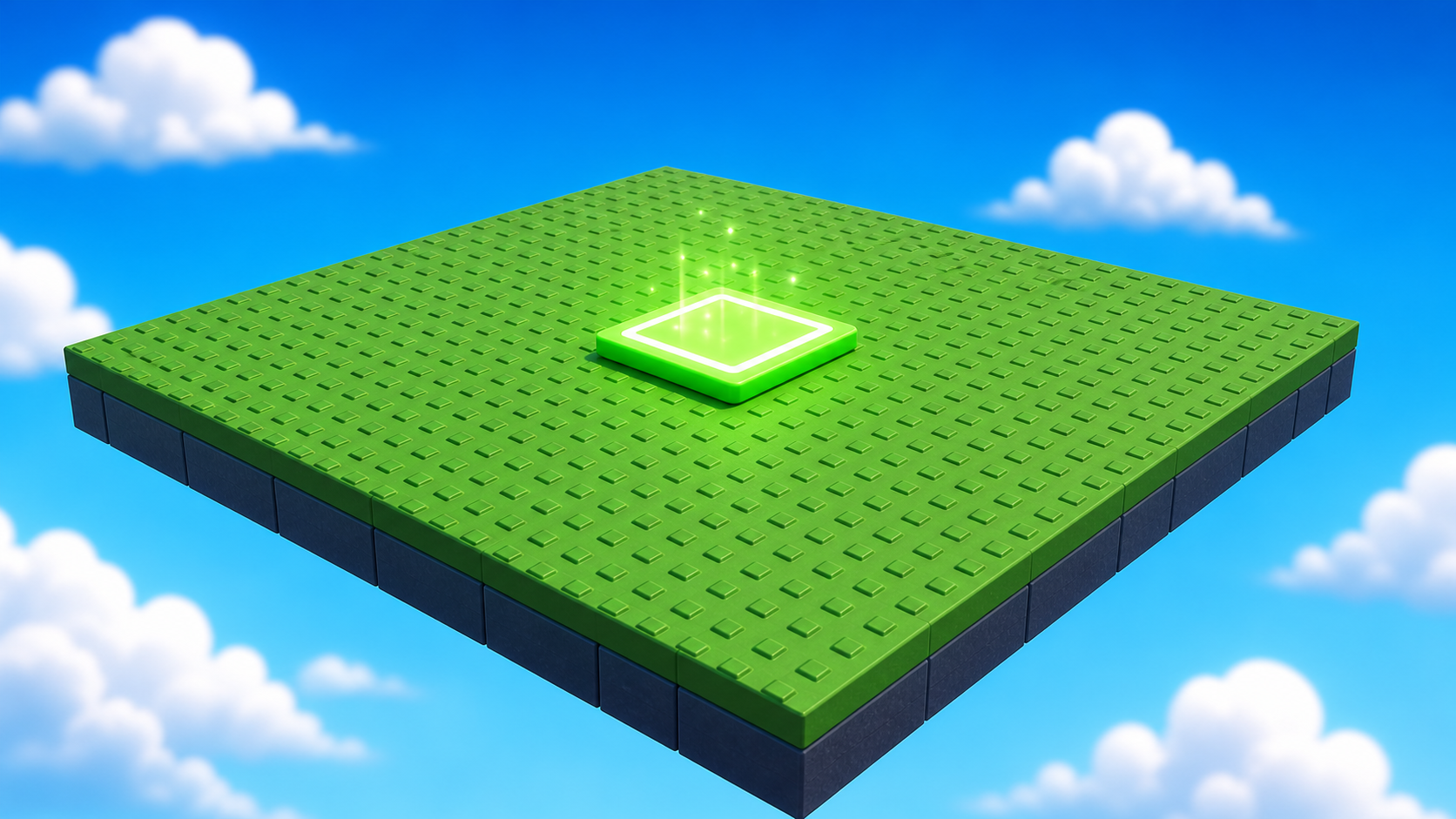
Every Obby starts with the simplest possible template — a flat green floor, a sky, and one SpawnLocation. We pick this template because it has nothing distracting in it.
Open Roblox Studio. On the New tab, pick the Baseplate template.
Step 2 — Delete the Baseplate
Our Obby will be platforms floating in the sky, not sitting on a giant green floor. So let's get rid of the floor before we add anything else. (If we waited until later, our parts would all sit on top of the floor and we'd have to move every single one.)
- In the Explorer panel (top right), expand Workspace.
- Find Baseplate.
- Right-click it → Delete (or press the Delete key).
The green floor disappears and you're left with just the SpawnLocation in the sky.
Step 3 — Build the Start Platform
The SpawnLocation can't float in nothing — we need a small platform under it for the player to stand on. We call this the Start Platform: the simple safe spot where the obby begins.
3.1 Make the Start Platform
- In Workspace, click + → Part.
- Click the new part and open the Properties panel.
- Set Size to
[30, 1, 30]— wide enough to stand on, thin enough to stay out of the way. - Set BrickColor to something calm (light grey, sand, or white).
- Set Material to Concrete or Smooth Plastic.
- Set Anchored to checked. We don't want the Start Platform falling.
- Rename the part to Lobby. That shared part name keeps later course instructions compatible, even though we will talk about it as the Start Platform.
3.2 Park the SpawnLocation on the Start Platform
Drag the SpawnLocation so it sits centered on top of the Lobby part. That's the spot every new player will appear when Play starts.
Step 4 — UI Scavenger Hunt
Before we start building, let's get to know Roblox Studio. The faster you find buttons and panels, the faster every stage feels. See if you can find each of these. Point them out to a partner (or yourself):
- The Toolbox — where we'll grab pre-made parts.
- The Properties panel — where we change a part's color, size, and other settings.
- The Explorer panel — the list of everything in your game.
- The Output window — where the game tells us if something went wrong.
- The big green ▶ Play button — to test your game.
- The Workspace folder in Explorer — the main place all your game's parts live.
- The Teams folder in Explorer — we'll use this in Stage 1.
Found them all? You're ready.
Step 5 — Save the project
In Studio's top menu: File → Save As. Name your file something like My Obby — First Last. You'll come back to this same file at the start of every stage.
Understand it
Two design choices on this page are worth pausing on.
We delete the Baseplate because every checkpoint in the obby will move the player to a new spot in the sky. If a flat floor existed below, a player who fell would land on it and the checkpoint system would feel pointless. Removing the floor turns "fall = you have to climb back" into a real consequence — which is what makes an obby feel like an obby.
We practice the UI before we touch the code because the slowest part of Roblox is usually finding the button you want. The Scavenger Hunt builds the muscle memory you'll need in every stage — once you know where the Properties panel and Toolbox live, the actual building goes twice as fast.
Test your setup
- Roblox Studio is open with a Baseplate project.
- The Baseplate (green floor) is deleted.
- A Start Platform part named Lobby (30×1×30, anchored) sits in the Workspace with the SpawnLocation centered on top of it.
- You found all seven items in the UI Scavenger Hunt.
- Your project is saved with a name you'll recognize tomorrow.
- Design check. Stand on the Start Platform in Play mode. Does it feel like a clear, safe beginning? (Boring is fine for now — Stage 1 starts the obby right next to it.)
If it breaks
- Roblox Studio won't open. Check that you're signed in to Roblox in your browser, then click the Open Studio button again from the Roblox website. If it still won't launch, ask a Code Coach — sometimes Studio needs a reinstall.
- I can't find the Baseplate template. It's under the New tab, in the All Templates list. If the New tab is hidden, look for File → New in the top-left menu.
- I accidentally deleted the SpawnLocation, not the Baseplate. Press Ctrl+Z (or Cmd+Z on Mac) right away to undo. If undo doesn't work, right-click Workspace → Insert Object → SpawnLocation to make a new one.
- A panel is missing from my Studio screen. Open the View menu at the top. Click the missing panel name (Explorer, Properties, Output, Toolbox) to turn it back on. If your Studio screen looks completely different from the screenshots, ask a Code Coach before you start Stage 1.