Code Creators: Scratch & AI Lab
AI course · Ages 7–9
Code Creators: Scratch & AI Lab
Students train their own AI to recognize hand signs, then build a Scratch-style game their AI controls — across ten guided stages.
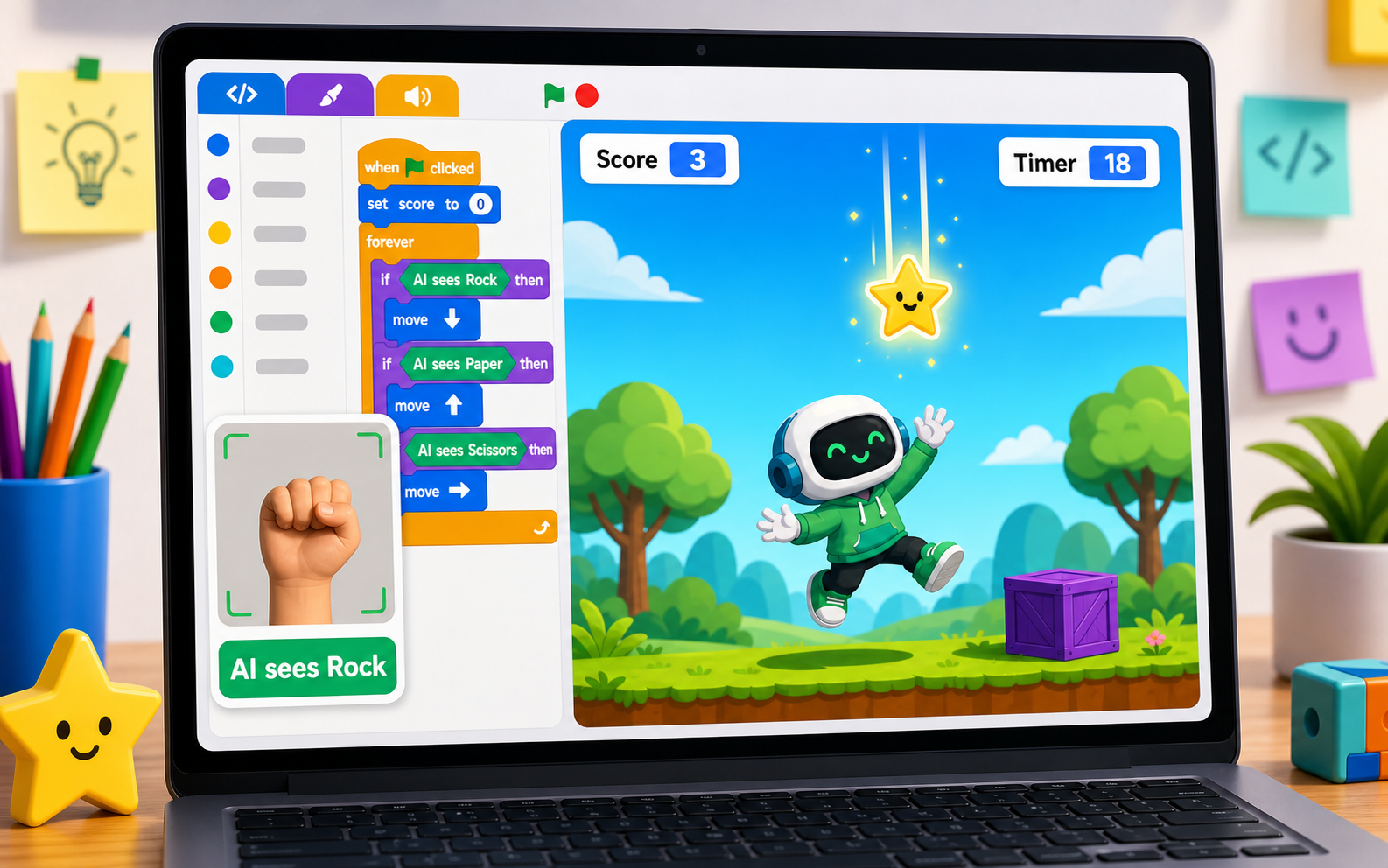
What students ship
A real AI game, trained and built by the student
Every stage adds one piece of the same project. By the last stage students have an AI model they trained from scratch and a game their AI controls — plus a short demo they can show to their parents.
An AI model you trained on your own examples
A Scratch-style game your AI controls
A polished demo you can show your parents
Project moments
Each stage adds something students can see and play
Every stage produces a visible change you can run, test, and tweak — the screen is the proof.
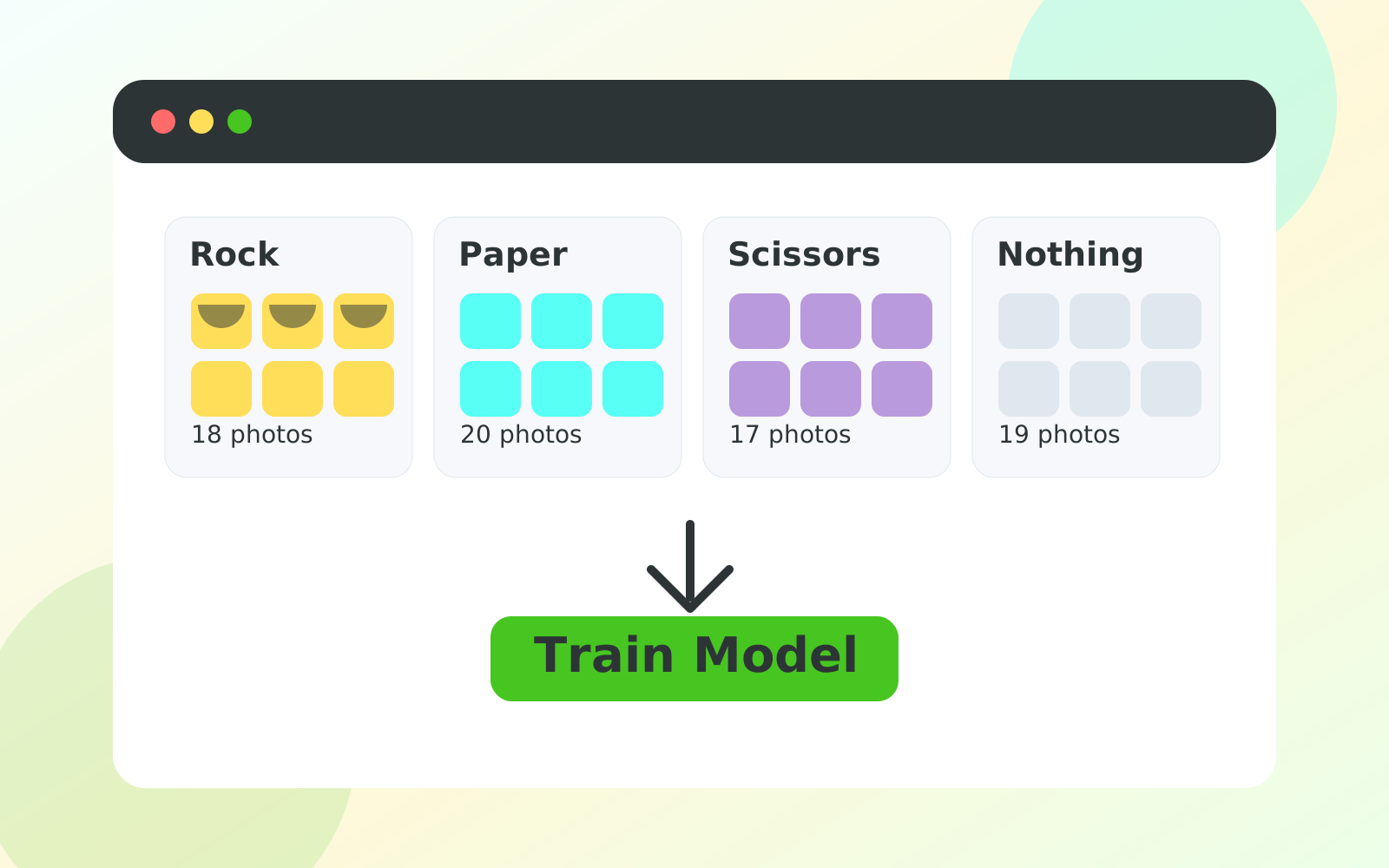
An AI you trained yourself
Students take photos of rock, paper, scissors, and “nothing,” then watch the AI start to recognize them. It is the moment training stops feeling like magic.
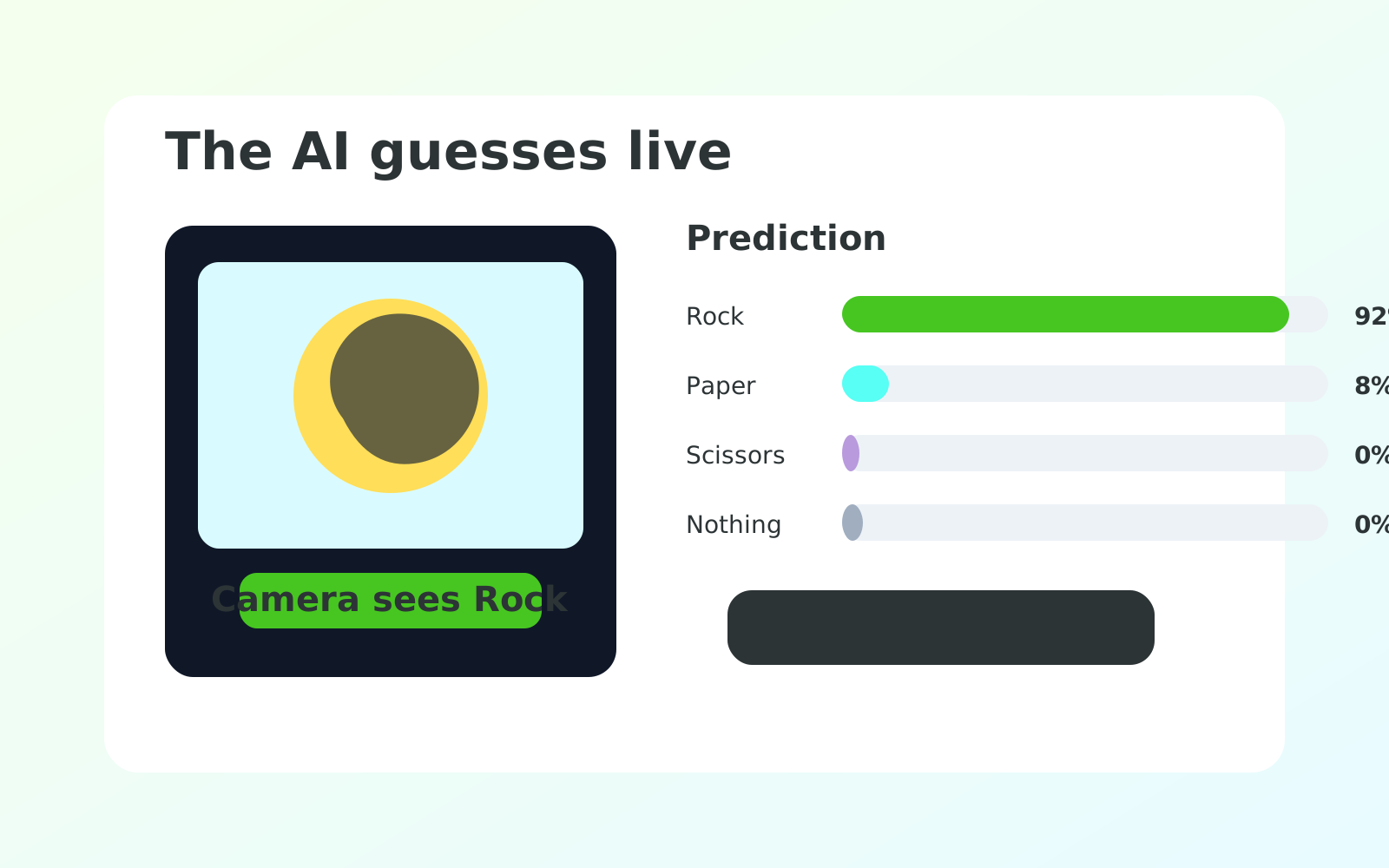
The AI guesses live
Confidence bars climb and fall as the student changes their hand. Stage 3 turns those bars into the lesson: an AI is never “sure,” it is just sure enough.
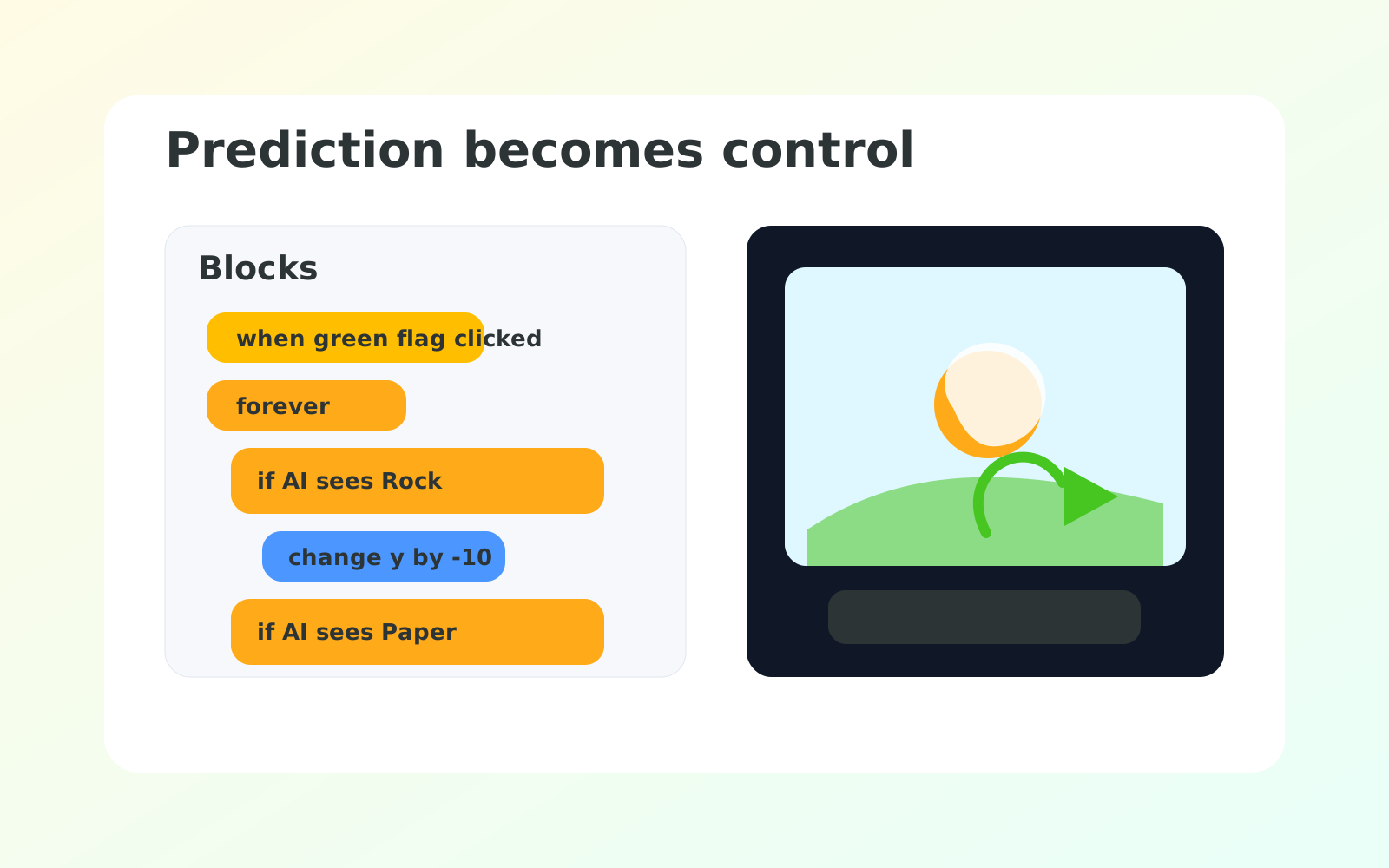
Hand sign moves the sprite
The AI prediction becomes a control. Show a sign, the sprite reacts. This is where the project goes from “cool demo” to “real game.”
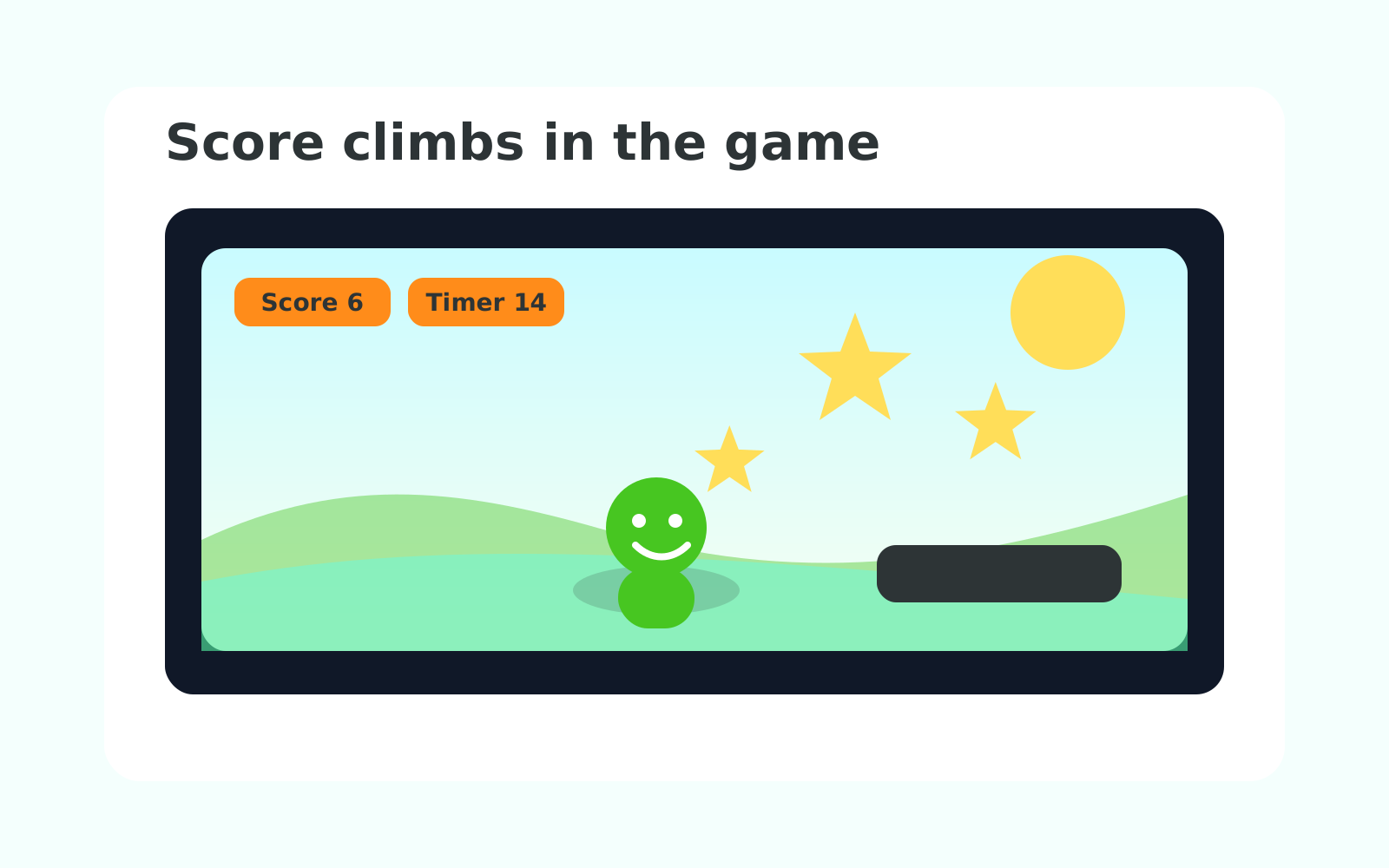
Score climbs in the Collector Game
Falling objects, a score counter, a goal. The same pattern students see in every arcade game — powered by an AI they built themselves.
Course path
Your project grows stage by stage
Each stage names what is new in the project and the one idea behind it.
AI Learns from Examples
See how examples and labels are how an AI starts learning.
Take photos of one more class for funStage 2Train Your First Model
Train an AI to tell rock, paper, scissors, and “nothing” apart.
Try a high-camera angleStage 3Test and Improve Your Model
Find weak spots in your AI and fix them with better examples.
Test in a totally new spotStage 4Connect to RAISE Playground
Bring your trained AI into the Scratch-like coding space.
Save your project linkStage 5Show the AI Prediction
Make a sprite say what the AI sees.
Add an emoji per classStage 6Control a Sprite with AI
Map each hand sign to a way the sprite moves.
Tune the speedStage 7Build the Game Rules
Add a score, a goal, and a way to win or lose.
Pick a smart score numberStage 8Customize the Game
Add your own sprites, backgrounds, sounds, and theme.
Make a title screenStage 9Final Build and Demo Practice
Test the game, fix bugs, and rehearse your demo out loud.
Playtest with a friendStage 10Final Demo Showcase
Show your AI game to parents in the last hour of camp.
Add a take-home linkFor coaches
Pacing labs are required
Each stage now includes timed testing, journaling, partner checks, or rehearsal work before stretches. Use those labs to keep the room together and fill the 3-hour block.
What is AI?
AI stands for artificial intelligence. That is just a long way to say a computer that learns from examples.
The computer does not start out knowing what rock, paper, or scissors look like. We show it pictures. We tell it the name of each picture. We let it practice. After enough practice, it can guess what it sees on its own.
That is the whole secret. The rest of this course is just doing that — and then building a game with the AI we trained.
How the two tools connect
Teachable Machine and RAISE Playground are two parts of one project.
Teachable Machine is where the AI learns from photos. RAISE Playground is where the game asks that trained AI what it sees. The model URL is the link between them.
Teachable Machine trains the AI. RAISE Playground loads that trained AI and uses its predictions inside the game.
Course time
Course Intro (30) · Course Setup (45) · Stage 1 (45) · Stage 2 (60) · Stages 3–8 (90 each) · Stage 9 (120) · Stage 10 — Final Demo (60) = 900 minutes, about 15 hours.
The course closes with a showcase. Plan around it.
Stages also include required Pacing Labs. These are not optional stretch challenges. They are timed testing, journaling, peer-review, and rehearsal blocks that keep the room together and fill out a long session.
That same material runs two ways:
- School semester — one class a week for 16 weeks. One stage per week, with catch-up, stretch, and showcase weeks built in.
- Summer camp — 3 hours a day for 5 days. Two to three stages a day, closing with a parent demo.
Coaches: the week map and the day-by-day plans are both in the Code Coach Pack.
If a stage runs long, pull time from stretch challenges first. Keep the Pacing Labs whenever possible — they are the built-in slow-down work that turns quick builds into a full session. Stage 10 (the demo) is the only block that should never get squeezed.
Who this is for
This course is built for ages 7–9. Reading levels and language stay simple. New words get defined in a vocab card every time they appear. Every stage has a short "Teacher demo" callout at the top and a "Coach notes" callout at the bottom — instructors can scan those two callouts to know what to show and what to watch for.
Students do not need to know how to code beforehand. They will use two tools:
- Teachable Machine to train the AI.
- RAISE Playground to build the Scratch-style game.
Both run in the browser. No installs.